Palawa kani (man speak)

Updated: Apr 29
There is no realistic hope of reviving any of the several—probably six to twelve— of the original languages of Tasmania. (For a map of Tasmanian language groups in a previous post, see here.) So people there have devised a new language from the fragments of the others. This is how Wikipedia describes it:
Palawa kani is a constructed language created by the Tasmanian Aboriginal Centre as a composite Tasmanian language, based on reconstructed vocabulary from the limited accounts of the various languages once spoken by the Aboriginal people of what is now Tasmania (palawa kani: Lutruwita).
The centre wishes to restrict the availability of the language until it is established in the Aboriginal Tasmanian community and claims copyright. The United Nations Declaration on the Rights of Indigenous Peoples (UNDRIP) is used to support this claim to copyright as it declares that indigenous people have the right to control their “cultural heritage, traditional knowledge, and traditional cultural expressions” and that states must “recognise and protect the exercise of these rights”. However, the declaration is legally non-binding and languages cannot receive copyright protection in many countries, including Australia and the United States.The centre however provides a list of place names in palawa kani and consents to their free use by the public. Dictionaries and other copyrightable resources for learning the language are only provided to the Aboriginal community.
Background
The Tasmanian languages were exterminated after the British colonisation of Tasmania and the Black War. The last native speaker of any of the languages, Fanny Cochrane Smith, died in 1905.
In 1972, Robert M. W. Dixon and Terry Crowley investigated reconstructing the Tasmanian languages from existing records, in a project funded by the Australian Institute of Aboriginal Studies. This included interviewing two granddaughters of Fanny Cochrane Smith, who provided “five words, one sentence, and a short song”. They were able to find “virtually no data on the grammar and no running texts” and stated “it is impossible to say very much of linguistic interest about the Tasmanian languages”, and they did not proceed with the project.
In the late twentieth century, as part of community efforts to retrieve as much of the original Tasmanian culture as possible, the Tasmanian Aboriginal Centre attempted to reconstruct a language for the indigenous community. Due to the scarcity of records, palawa kani was constructed as a composite of several of the estimated dozen original Tasmanian languages.
Visitors to Tasmania can go to public places such as museums, Mount Wellington, or even the foyer of the Tasmanian Aboriginal Centre and see examples of palawa kani.
Tasmanian Museum and Art Gallery Mt Wellington (kunanyi) Tasmanian Aboriginal Centre Inc.
It soon becomes apparent that the words used in palawa kani are all selected from historic wordlists. Such words were often spelt in various ways by the original recorders (G.A. Robinson, J. Milligan and numerous others including French voyagers in the 1790s). Here is an example of one record by one of these early contributors:
"Coantana" gunda-na "Earth" earth Jorgenson 5,Uncertain,[:312:14],[dk],[Tas],[c.1835]
This record was made by the colourful figure Jorgen Jorgenson in about the mid 1830s.
The writer, your amateur researcher, has collected as many of these early records as could be found and put them into a database. This enables the records to be sorted, and searched. For example, the database makes it possible to find, isolate and compare all the different records for say, ‘earth’, or ‘water’ or ‘fire’ and so on, and to do so in an instant. Or find all the nouns, or verbs, or pronouns, or anything else, instantly. The Tasmanian database featuring some 30 000 words is one of a series of such ‘Bayala’ databases collected from historical records made by various contributors from the 1790s and the following 150 or so years covering the whole country.
Such records from the ‘Bayala’ language databases are sometimes presented in the following manner:
Australian | respelt | English | EngJSM | Source |
"Coantana" | gunda-na | "Earth" | earth | Jorgenson 5, Uncertain,[:312:14],[dk],[Tas],[c.1835] |
"[lakade]" | laga-di | "water" | water | Plomley gm [VDA:460:3.2] [NMid] [Tas] [1829] |
"mouta" | muda | "bird" | bird | Merite: Esperance & Recherche Tas 1793,[d.3:3:64] [SE] [Tas] [1793] |
"tiennah" | dina | "Bandicoot [P. obesula]" | bandicoot | Plomley mj [A610.mj:292:17] [OyB] [Tas] [1857] |
"Plan.ten.er" | blan-dina | "Snake" | snake-having [??] | ML GAR: A7085 [A7085:847:17] [BLmd] [Tas] [1829-34] |
"rulla" | rala | "strong" | strong | Plomley mj [:417:3],[SE],[Tas],[1857] |
Table 1: Sources for the first palawa kani example: kuntana layka-ti muta & tina & plantina ngayapi rrala
The first column in Table 1 features the original records. These give an idea of style of spellings used by the original contributors, the examples reflecting the attempts being made back then by people of different origins and backgrounds doing what they could to best render into writing how words never heard by Europeans before actually sounded. The lighter grey column features the original translations these recorders offered. The orange column in between provides a modern simplified respelling of the word. The yellow column is a view of it in simplified English. In the final ‘source’ column the name of the contributor is given, along with source language in square brackets (North Midland, South East, Oyster Bay etc.), as well as, at the end, the date of the record concerned. Also given are the page number and line number for the record, again in square brackets, to assist anyone to find it should he or she want to check it.
The particular collection of words used in Table 1 are those featured in the first line of the main table, Table 2, below. (Note that no source record for the word ngayapi in the first line of Table 2 could be found in the database.)
Table 2 presents snapshots of palawa kani words spotted in various locations around Tasmania. The words concerned are featured in the first column (Australian), with the associated English translation used, or commentary, in the next. An analysis column is in the middle of the table, by the writer, drawn from the Tasmanian database mentioned above. Palawa kani words are based on original records but respelt, in simplified way.
Australian | English | English JS analysis | picture | Source |
kuntana layka-ti muta & tina & plantina ngayapi rrala | In this wetland, birds and animals and reptiles survive | earth water bird bandicoot snake xxx strong |  | King Island C E Pennys Lagoon 9121 |
trawtha makuminya | Tracks through Big River Country | Oyster Bay / path |  | Tas Ab Cent 0808.1 |
kanaplila, pinina Invasion Day-ta ? | Celebrate and laugh on Invasion Day ? | dance laugh Invasion Day-at |  | Tas Ab Cent 0808.2.1 |
putiya ! | NO! |
|
| Tas Ab Cent 0808.2.2 |
Invasion Day pumili mina tangara ! | Invasion Day makes me weep bitterly! | Invasion Day make-did me weep |
| Tas Ab Cent 0808.2.3 |
laritja | cord, string, thread | thread |  | Tas Ab Cent 0808.3 |
mapali | many, plenty, lots of, very | plenty |  | Tas Ab Cent 0808.4 |
wiri | starfish |
|  | Tas Ab Cent 0808.5 |
patrula | fire |
|  | Tas Ab Cent 0808.6 |
takamuna pakana | NO TRANSLATION | awake/travel man |  | Tas Ab Cent 0808.7 |
mina lakapawa nina | I see you | I see-did thee (you) |  | Tas Ab Cent 0813.1 |
pakana | Tassie blackfella [NE] |
|  | Tas Ab Cent 0817.1 |
palawa | Tassie blackfella [SE] |
|  | Tas Ab Cent 0817.2 |
warina | warina shell | cloud / right / shell / weary |  | Tas Ab Cent 0817.3 |
muka | the sea, salt water | water |  | Tas Ab Cent 0817.4 |
pamukita | porcupine fish | fishtype |  | Tas Ab Cent 0817.5 |
wayana | shark |
|  | Tas Ab Cent 0817.6 |
katina | beach, shore | beach | 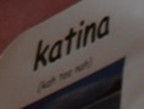 | Tas Ab Cent 0817.7 |
tipara nina doing today | what are you doing today | whatsthat thou [doing today]
tipara nina magara gudi whatsthat thou make today |  | Tas Ab Cent 08xxx |
wurangkili / rayakana / mungalina | sky / song / rain | sky sing [play speak] rain |  | Tas Mt Well 0761 |
kunanyi | The mountain - Mount Wellington |
|  | Tas Mt Well 5633.1 |
waranta palawa, milaythina nika | This country is us - and we are this country | we-all man / country here/this |
| Tas Mt Well 5633.10 |
milaythina nika milaythina-mana | This is our country | country here/this country me-of [?] |
| Tas Mt Well 5633.2 |
pakana laykara milaythina nika mulaka | Aboriginal people ran over this land to hunt | man run country here/this search |
| Tas Mt Well 5633.3 |
pakana-mapalia krakapaka milaythina nika | and many died here | man plenty kill country here/this |
| Tas Mt Well 5633.4 |
tapilti larapuna, tapilti putalina | From Eddystone Point, to Oyster Cove | go xxxx go xxx | Eddystone Point: TANG.UM.RONE.NER
Oyster Bay: DRAY.TER: | Tas Mt Well 5633.5 |
tapilti kunanyi, tapilti tayaritja | From Mount Wellington, to the Bass Strait Islands | go Mt. Wellington. S. [Sterling] | the Big Hill, Mount Wellington: BUR.NANG.YE | Tas Mt Well 5633.6 |
waranta takara milaythina nara takara | We walk where they walked | go Bass Strait Islands |
| Tas Mt Well 5633.7 |
nara taymi krakapaka waranta-tu waranta tunapri nara | And they will never be dead for us as long | they-all lacking kill/dead us-all-for us-all aware they-all |
| Tas Mt Well 5633.8 |
milaythina nika waranta pakana | as we remember them | country here/this we-all man |
| Tas Mt Well 5633.9 |
nara makara lumi... waranta makara lumi | We will always be here | they-all sit hither / we-all sit hither |  | TMAG 0608.1 |
tunapri pakana mana-mapali milaythina-ti nara lumi...lutha-ti, tiyuratina-ti, milaythina-ti, takila-ti. nara makara lumi... waranta makara lumi. | Country holds the knowledge of the Old People... They are still here - in the trees, in the wind, in the earth and in our hearts. They will always be here - as will we' | aware man xxx-plenty / country-of they-all here / tree-of wind-of country-of heart-of / they-all sit here / we-all sit here |
| TMAG 0608.2 |
pakana tayaritja-ta | aborigines on the islands - the survival of a community |
|  | TMAG 0609 |
ningimpi rrala | strong matriarchs—our grandmothers | matriarch strong |  | TMAG 0615 |
pakana mana-mapali | tasmanian aboriginal community | man xxx-plenty |  | TMAG 0617 |
wybalenna |
| man hut |  | TMAG 0624 |
takariliya milaythina-ta | families on country | family country-at |  | TMAG 0630 |
paywootta | long time ago... |
|  | TMAG 0633.1 |
kani mina milaythina-nara | Where is your Country? | speak-QUERY country-you-all |
| TMAG 0633.2 |
milaythina nika / milaythina Muwinina; milaythina mana-mapali | this is Muwinina Country, our Country
| country here / country Hobart / country xxx-plenty |  | TMAG 0634.1 |
timtumili minanya | [Derwent River] |
|
| TMAG 0634.2 |
ninga | tea-tree (paper-bark) canoe
| bark |  | TMAG 0638.1 |
tuylıni | stringy-bark canoe of three bundles | bark [stringy] |
| TMAG 0638.2 |
turi | middle bundle (keel) | back |
| TMAG 0638.3 |
pupati | bow | front [?] |
| TMAG 0638.4 |
lipi | stern | xxx |
| TMAG 0638.5 |
praywi | paddle | paddle |
| TMAG 0638.6 |
taypani takara waranta-mapali | Come walk with us | xxx go we-two plenty |  | TMAG 0640:1 |
nayri nina-tu | Thank you | xxx thee-to |
| TMAG 0640:2 |
waranta mulaka yula | muttonbirding - a lifetime of tradition | we-all search bird |  | TMAG 0641 |
prupari nguwana nara | try the mutton birding experience |
|  | TMAG 0642 |
kanaplila | dance | dance |  | TMAG 0644 |
tirrina | baskets of grass |
|  | TMAG 0644 |
tareena | basket |
|  | TMAG 0645.1 |
reigoua | seaweed |
|
| TMAG 0645.2 |
rikawa | kelp water carriers | seaweed |
| TMAG 0645.3 |
canlaride | necklace |
|
| TMAG 0645.4 |
karnepleelare | dance | dance |  | TMAG 0648 |
kanalaritja | string of shells | necklace |  | TMAG 0654 |
tunapri pakana mana-mapili | Our people's knowledge | aware man xxx-plentykanalaritja |  | TMAG 0656 |
raytji ningina luwitina manta | they took the children away | whiteman grasp child-[having [?]] distant |  | TMAG 0660 |
ningina pakana mana-mapali milaythina pakana | bringing our old people home | bring man xxx-plenty country man |  | TMAG 0661 |
pakana mana-mapali: taypani manta; tapilti manta | we've come a long way: we've got a long way to go | man xxx-plenty / go-come distant / go-come distant |  | TMAG 0662 |
Parrawa Parrawa | Go Away! |
| 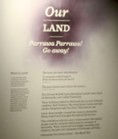 | TMAG 0679 |
lutruwita | For at least 40,000 years Aboriginal people have lived in lutruwita, now called Tasmania. |
|  | TMAG 0681 |
ningina tunapri | to give knowledge and understanding | bring/grasp aware |  | TMAG 5665 |
tuylini | stringybark canoe | bark |  | TMAG 5665.2 |
waranta takamuna rrala | we stand strong | we-all stand strong |  | TMAG 5667 |
waranta makara lumi | Been here forever | we-all sit here |  | TMAG 5668 |
mapiya lumi | around here |
|  | TMAG 5673 |
wurangkili | sky |
|  | TMAG 5675:1 |
puwatina | cave |
|
| TMAG 5675:2 |
turikina | waterfall |
|
| TMAG 5675:3 |
lutha | tree |
|
| TMAG 5675:4 |
truwala | mountain |
|
| TMAG 5675:5 |
muka | sea |
|
| TMAG 5675:6 |
patrula | fire |
|
| TMAG 5675:7 |
taypani milaythina-tu | return to country | go country-to |  | TMAG 5676 |
wukaluwikiwayna | Maria Island |
| 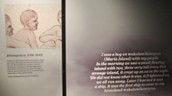 | TMAG 5680 |
pulingina martula | Welcome to The Nut at Circular Head | welcome Circular Head |
 | Circular Head Aboriginal community 6265 |
ya pulungina | Hello. welcome | hey xxx |  | Cradle Mountain Visitors Centre 6062 |
krakana patrula riawunna | [sit] [fire] [circle] | sit fire circle | ![Text on a sign: "krakana [sit], patrula [fire], riawunna [circle]." Describes seating for cultural practices around a fire.](https://static.wixstatic.com/media/67612f_a91dcc1d9e6b4b41af15f8d01aa9d4fb~mv2.jpg/v1/fill/w_271,h_144,al_c,q_80,enc_avif,quality_auto/67612f_a91dcc1d9e6b4b41af15f8d01aa9d4fb~mv2.jpg) | Devonport Tiagarra Aboriginal Centre 3011 |
Table 2: Examples of palawa kani words, with explanations, and illustrations of where seen
Jeremy Steele
22 April 2026


Comments